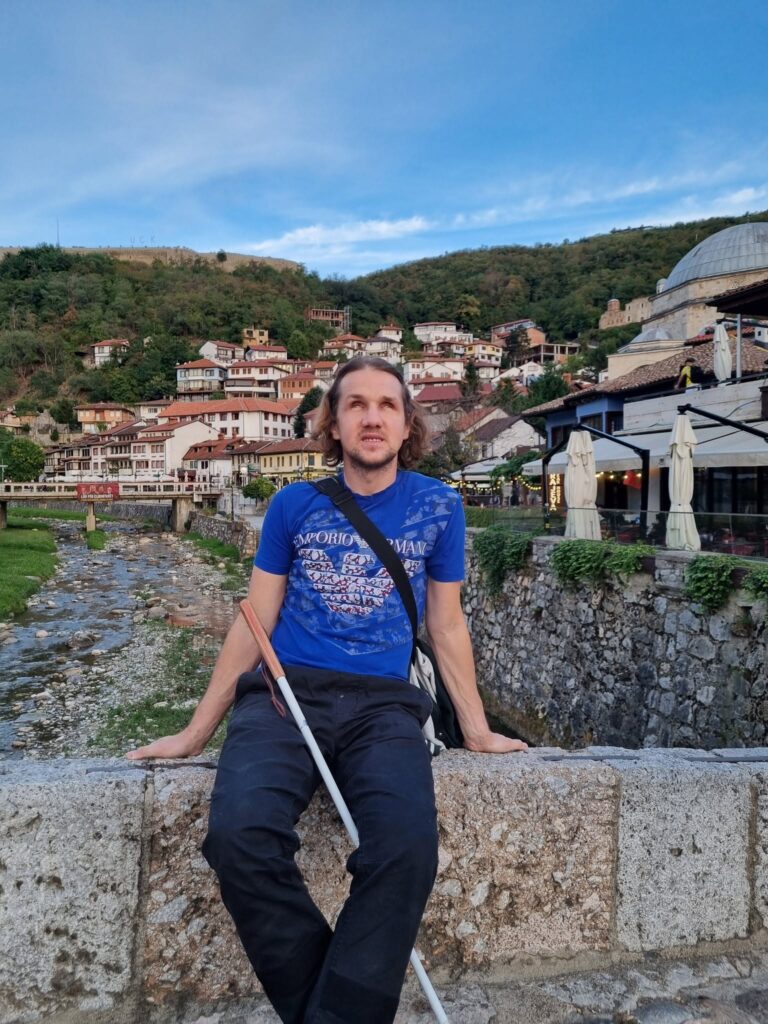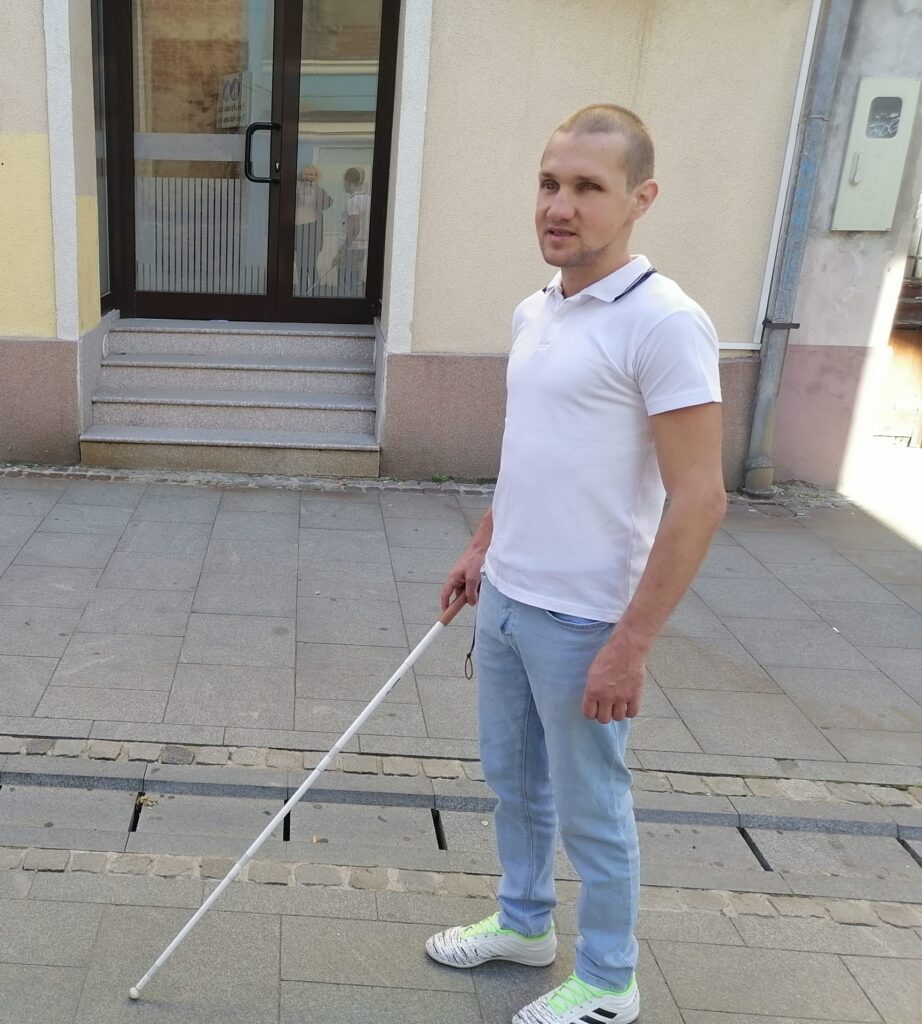
 Sometimes, the greatest change does not begin with a major event, an important institutional decision, or a specific project. Sometimes, it begins when one person decides not to give up on their dreams and possibilities—even when their life circumstances change completely. Ervin Ćosić is a young man whose story illustrates just how vital education, opportunities, support, and personal initiative are in building an independent life. After losing his sight in 2012, Ervin faced a new set of life circumstances. Rather than abandoning his professional development, he chose to continue his education and retrain as a physiotherapy technician. He secured his first job in 2017 at the Čelić Community Health Centre.
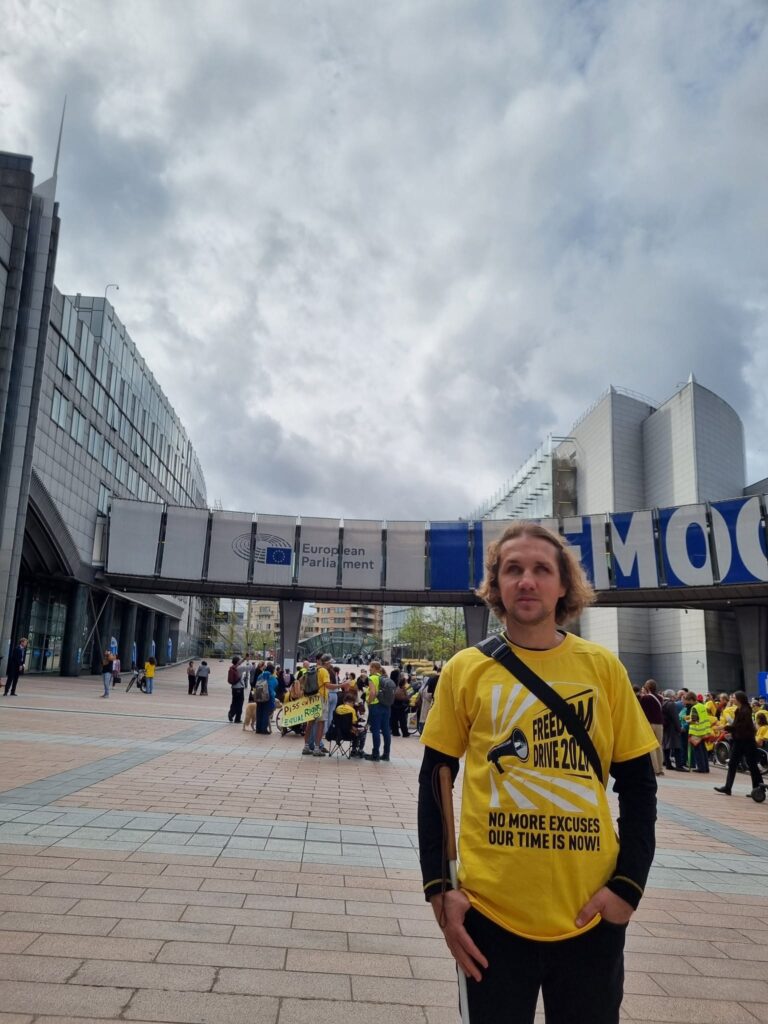
However, his professional path was not the only area in which he wanted to make a change. Through involvement in the activities of organizations of persons with disabilities, Ervin gradually developed his activist skills, acquired new knowledge and assumed increasing responsibility. Since 2022, he has been serving as the president of the Active Youth with Disabilities Coalition of Organizations of Persons with Disabilities in the Tuzla Canton.
His engagement was not limited to meetings and activities of the Coalition. In Čelić, he has been leading an informal local youth group for several years, participates in writing and implementing projects and initiates activities aimed at the needs of young people in the local community. Today, he is employed at the Information Center for People with Disabilities "Lotos" Tuzla, where he continues to contribute to empowering young people and improving the position of people with disabilities.
What has actually changed? Much more has shifted than just one person’s professional status. The young man who navigated the process of adapting to new life circumstances has become someone who takes responsibility, brings other young people together, launches initiatives, and helps create opportunities for others. His story demonstrates that people with disabilities need not be merely recipients of support and programs; they can also be their creators, organizers, advocates, and leaders. It also highlights the vital importance of providing young people with a space where they can develop their potential, make decisions, learn from one another, and take on responsibility. Perhaps the most significant change is not just what Ervin has achieved for himself, but what he is now able to make possible for others. For the true value of empowerment is not measured solely by the number of workshops, training sessions, or meetings held; it is measured by the individuals who, following these activities, gain the opportunity to transform their own lives—as well as the lives of the communities in which they live.
Ervin's story reminds us of one important thing: people with disabilities do not need pity and predetermined boundaries. They need equal opportunities, support when needed and space to make their own decisions about their lives. And when such a space exists, change becomes possible.